Insights
Ideas worth keeping.
Notes on AI, design systems, software, architecture, marketing, operations, and the digital systems behind efficient businesses.
Editorial filters
Choose a system lens.
Every published E2W note.
Latest note
Featured

How Acoustic Briefing Shapes Interior Design Decisions
A practical activity-to-acoustic-criteria matrix for connecting interior uses, sound sources, sensitive listeners, adjacencies, design responses, evidence, and ownership before layouts and material palettes are fixed.
Read the articleAll
Latest notes.
51 published notes · 1 featured · 50 in the archive

Defining BIM Model Uses Before Coordination Starts
A practical model-use contract for connecting BIM activity to decisions, participants, information inputs, exchanges, validation, timing, and ownership before coordination starts.
· 10 min read
Planning Product Support Boundaries Before Launch
A practical support-boundary contract for defining eligible users, issue classes, channels, response expectations, evidence, authority, escalation, third-party dependencies, closure, and end-of-life before launch.
· 10 min read
How Landscape Interfaces Affect Building Durability
A practical landscape-building interface matrix for coordinating water, movement, levels, roots, maintenance, materials, evidence, responsibility, and timing before durable details are split across packages.
· 10 min read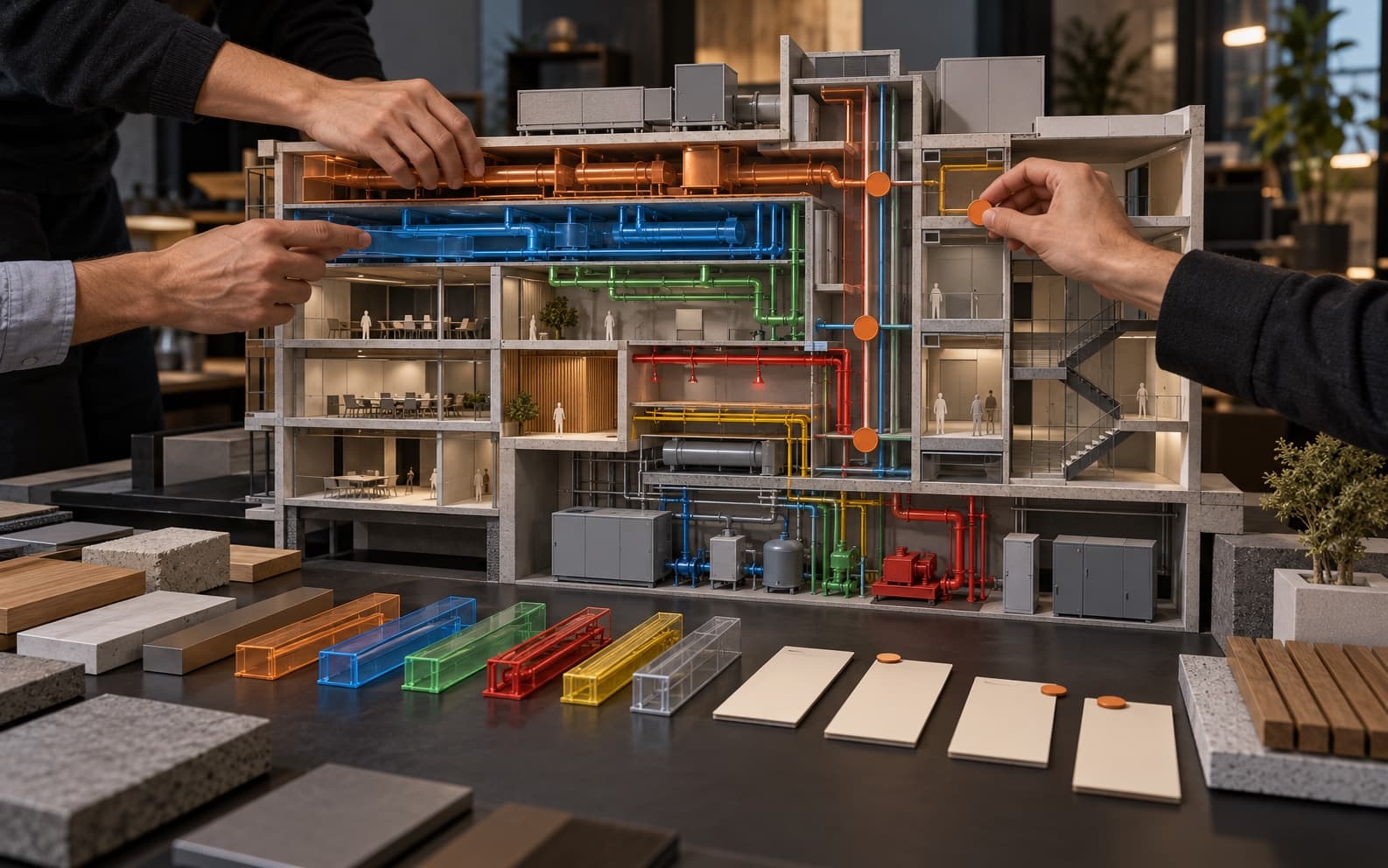
What Clients Should Decide Before MEP Coordination Begins
An owner-side MEP input register for resolving operating patterns, loads, resilience, controls, maintenance access, future capacity, and acceptance evidence before coordination hardens assumptions into the building.
· 10 min read
Designing Service Capacity Before Demand Becomes a Crisis
A practical capacity decision board for service businesses that need to absorb changing demand without hiding queues, degrading quality, exhausting specialists, or automating work that still needs judgment.
· 10 min read
How Structural Grids Shape Long-Term Building Flexibility
A grid-decision matrix for testing current planning, future scenarios, spans, depth, circulation, façade, services, construction logic, tolerance, procurement, and decision ownership before early geometry hardens.
· 10 min read
What Owners Should Decide Before Choosing a Construction Procurement Route
An owner-side decision matrix for testing design control, contractor involvement, cost evidence, programme pressure, risk ownership, specialist input, governance, change, and handover before selecting a construction procurement route.
· 11 min read
Planning Data Retention Across Business Systems
A ten-field retention contract for connecting business need, legal and contractual constraints, system ownership, backups, exports, analytics, AI retrieval, holds, and verified disposal.
· 10 min read
Planning Automation Exceptions Before Scaling a Workflow
An eight-part exception contract for scaling automated workflows without hiding ambiguity, multiplying retries, losing evidence, or leaving people without authority to intervene.
· 10 min read
How to Define Useful Asset Information Before BIM Handover
An owner-side framework for defining asset information by purpose, source, format, acceptance test, delivery stage, and maintenance owner before BIM handover becomes a late data-cleaning exercise.
· 11 min read
Designing a Content Migration Without Losing Meaning
A practical eight-gate migration framework for deciding what to retain, reshape, consolidate, redirect, archive, validate, and place under accountable ownership.
· 10 min read
When Facade Decisions Need Early Cost and Performance Alignment
An E2W eight-gate framework for aligning facade geometry, glazing, shading, assemblies, junctions, durability, access, procurement, and whole-life cost before late redesign.
· 10 min read
Designing Secure Handover for Digital Products
A practical eight-control acceptance framework for transferring digital-product ownership, access, environments, release evidence, monitoring, recovery, knowledge, and operational authority.
· 10 min read
The Client-Side Design Review Before Construction Starts
A practical client-side go, conditional-go, or hold framework for reviewing brief alignment, approvals, cost, coordination, procurement, operations, and residual risk before construction begins.
· 10 min read
Defining Service Quality Before Scaling Delivery
A practical framework for defining what good service delivery means before adding more clients, people, locations, partners, or automation.
· 9 min read
Designing Workspaces for Operational Adaptability
A practical design framework for workplaces and mixed-use business spaces that need to absorb changing teams, technology, accessibility needs, maintenance, storage, and service demands.
· 10 min read
Planning Data Ownership Across Business Systems
A practical framework for assigning data ownership across CRM, finance, delivery, support, analytics, and automation systems without confusing accountability with administration.
· 10 min read
The Productive Role of Constraints in Design
A practical framework for turning user needs, accessibility, materials, production realities, and review criteria into design constraints that improve judgment instead of flattening creativity.
· 9 min read
What Makes a Construction Drawing Buildable
Buildability comes from coordinated dimensions, interfaces, tolerances, specifications, sequence assumptions, scope boundaries, and a disciplined route for questions and change.
· 10 min read
How to Design a Business Knowledge Base That Stays Useful
A practical framework for designing ownership, taxonomy, source records, permissions, search, review cycles, and archival into a business knowledge base that remains trustworthy as a team grows.
· 10 min read
How Project Data Becomes Fragmented Across AEC Tools
A practical AEC information-structure model for connecting models, drawings, RFIs, submittals, cost records, files, and dashboards without pretending one platform can replace every specialist tool.
· 10 min read
Designing Digital Service Recovery Before Failure
A practical framework for designing error states, safe retries, support handoffs, incident communication, refunds, and operational ownership before a digital service fails.
· 9 min read
Why Construction Documentation Quality Affects Project Risk
A practical client-side framework for reviewing whether drawings, specifications, schedules, models, approvals, and revisions form one coordinated construction information system.
· 10 min read
What Good Technical Discovery Prevents
Good technical discovery does not promise certainty. It identifies the assumptions, system boundaries, data constraints, integration risks, security needs, accessibility requirements, and delivery choices that must be understood before a team commits to build.
· 9 min read
What Product Teams Should Standardize First
Product teams need shared standards, but not for every choice. Begin with language, states, measurement, accessibility, release evidence, and ownership so discovery can move without recreating operational risk.
· 8 min read
Designing Restaurants Around Service Flow
Restaurant interiors should begin with the operating journeys behind every service: arrival, ordering, seating, cooking, serving, clearing, cleaning, delivery, and waste—not atmosphere alone.
· 9 min read
Service Blueprints for Better Digital Delivery
A practical service blueprint makes hidden delivery work discussable: user steps, visible touchpoints, backstage actions, supporting systems, handoffs, evidence, exceptions, and ownership.
· 9 min read
The Business Value of Productized Services
Productized services create value when they make outcomes, scope, price logic, delivery stages, evidence, and exceptions easier for clients and teams to understand.
· 8 min read
How Architectural Programming Reduces Redesign
Architectural programming clarifies users, activities, space needs, adjacencies, constraints, performance criteria, and decision ownership before concept design—so later design effort is spent refining the right problem.
· 10 min read
Designing for Trust in Digital Products
Digital trust is not a visual mood or a row of badges. It is the product-level result of clear promises, accessible interactions, proportionate data use, secure flows, honest proof, and dependable recovery.
· 8 min read
Better Dashboards Start With Better Questions
The strongest dashboards are not collections of attractive charts. They are maintained decision systems built around purpose, trusted definitions, useful comparisons, visible exceptions, and clear action.
· 8 min read
The Hidden Cost of Disconnected Tools
Disconnected tools do not only create duplicate entry. They turn people into the integration layer, weaken handoffs, fragment evidence, and make routine failures harder to see and recover from.
· 8 min read
Inclusive Web Quality Standards
Inclusive web quality turns semantics, readable content, keyboard operation, clear feedback, and human evaluation into shared acceptance criteria rather than a specialist audit at the end.
· 8 min read
Designing Landing Pages Around Decisions
Landing pages should not be arranged as collections of persuasive sections. They should be designed as decision paths that connect an arrival promise, useful evidence, a proportionate call to action, and a measurable next step.
· 7 min read
Why Good Visual Identity Needs Operational Logic
A logo can be delivered as a file. A visual identity has to survive everyday decisions across documents, products, campaigns, spaces, and teams. That requires rules, ownership, accessible standards, and a practical system for change.
· 7 min read
The Practical Future of WordPress for Businesses
The useful future of WordPress is neither every website nor no website. It is a deliberately maintained publishing platform with clear extension boundaries, content ownership, and an honest route to custom software when the business model demands it.
· 7 min read
What Clients Really Buy When They Buy Strategy
Clients buy strategy when they need clearer choices: what matters, what does not, where to compete, how to position, what to do first, and how to decide as conditions change.
· 7 min read
Hospitality Websites Need More Than Beautiful Pages
Beautiful pages can create desire, but direct booking depends on a longer chain: useful property content, credible promises, accurate rates, accessible decisions, secure payment, and integrations the operations team can trust.
· 7 min read
How Software Architecture Shapes Business Speed
Business speed is not how quickly a team can ship the first version. It is how reliably the software can absorb the next change without turning every decision into a coordinated rebuild.
· 7 min read
Smarter Content Operations for Growing Teams
Growing teams do not need a busier content calendar. They need a content operating model that protects quality, makes ownership visible, adapts strong ideas for the right channels, and keeps published work useful over time.
· 7 min read
User Experience Before Interface Design
Interface design becomes more useful when it follows a clear account of the user, the wider service journey, the content people need, and the decisions the website must support.
· 7 min read
The Quiet Value of Better Project Documentation
Project documentation earns its value quietly: it reduces ambiguity while work is moving, preserves the reasoning behind decisions, and makes delivery easier to review, hand over, and trust.
· 7 min read
Building Brands That Can Scale Across Markets
International growth does not require a brand to look and sound identical everywhere. It requires a clear core, deliberate adaptation layers, and governance that keeps local relevance from becoming fragmentation.
· 6 min read
Automation Should Remove Friction, Not Judgment
The best automation does not remove people from every decision. It removes avoidable friction, makes routine work more reliable, and gives human judgment a clear place to intervene.
· 6 min read
What a Design System Actually Solves
Design systems do more than standardize buttons. They reduce repeated decisions, carry accessibility into shared components, clarify ownership, and give product teams a common way to evolve the interface.
· 6 min read
The Business Case for Fast Websites
Fast websites protect attention, improve usability, support search quality, reduce server waste, and make digital operations easier to maintain over time.
· 5 min read
Why Marketing Systems Beat Marketing Campaigns
A campaign can make noise. A marketing system makes the work repeatable: content, traffic, attribution, CRM handoff, review, and improvement connected into one operating rhythm.
· 5 min read
Designing Architecture for Operational Clarity
Operational clarity is not only a management problem. In commercial and hospitality spaces, it is shaped by circulation, thresholds, service routes, material decisions, documentation, and the way a building is handed over to the people who run it.
· 5 min read
Why Good Websites Are Built Like Operating Systems
A serious website now routes attention, organizes content, connects tools, measures behavior, and supports decisions. That makes it closer to an operating system than a stack of static pages.
· 5 min read
The New Role of AI in Small Business Operations
Small businesses do not need to treat AI as a magic productivity layer. The durable value comes from better workflows, clearer decisions, safer automation, and human-owned operating discipline.
· 5 min readFollow the E2W journal.Join the list